
By Admin Halgain | Updated May 2026 | 8 min read
If you’ve been feeling like technology is moving faster than ever, you’re not alone. Technology Trends 2026 are shaping up to create one of the most transformative periods in recent memory, with breakthroughs happening across AI, computing, cybersecurity, and the physical world.
These Technology Trends 2026 are already influencing how businesses operate and how people interact with technology every day.
Whether you run a business, work in an office, or simply use your smartphone every day, Technology trends 2026 are likely to influence your life in ways both big and small. Some are already becoming part of everyday life, while others are advancing faster than many experts expected.
In this article, we’ll explore the most important technology trends shaping 2026, explain what they mean in simple terms, and look at how businesses and individuals can prepare for what’s coming next. Technology Trends 2026 are reshaping industries, businesses, and everyday life faster than ever before.
Technology Trends 2026 are expected to reshape industries, create new opportunities, and change how people interact with technology.
Why 2026 Is a Turning Point for Technology
The Pace of Change Has Never Been Faster
A few years ago, “AI” was still mostly a buzzword. Today, it’s quietly embedded in your email drafts, your customer service calls, your medical diagnoses, and your online shopping recommendations.
According to research from Gartner, global AI spending is projected to reach $2.52 trillion in 2026 — a 44% jump from the year before. That’s not a gradual evolution. That’s a sprint.
What’s different about 2026 isn’t just what is changing — it’s the speed at which change is reaching ordinary people, not just tech companies or government labs.
What’s Driving This Technology Shift?
Three forces are converging at once:
- Massive investment in AI infrastructure from governments and corporations alike
- Accessible tools that let non-technical users build and deploy AI-powered solutions
- New hardware that can run complex AI models faster and cheaper than ever
The result? Emerging technologies that once took a decade to mature are now reaching mainstream use in 18 to 24 months.
The Top Technology Trends in 2026 You Need to Know
1. AI-Native Development — Software Built by AI, for Everyone

Not long ago, building software meant writing thousands of lines of code. Today, developers are using AI systems to generate, test, and deploy entire applications just by describing what they want.
This trend — often called AI-native development — goes far beyond autocomplete. Tools now exist that let someone with zero coding experience say “build me a customer feedback tracker for my bakery” and get a working app within minutes.
For businesses, this is huge. Small companies can now build custom software tools that used to cost tens of thousands of dollars in developer time. For individuals, it means the barrier to turning an idea into a product has nearly disappeared.
For example, a small travel agency could now build a custom AI-powered booking assistant in a matter of hours using modern AI development platforms. Just a few years ago, creating the same solution would have required significant time, technical expertise, and budget.
2. Multiagent AI Systems — When AI Works as a Team
You’ve probably used a single AI assistant before — ask a question, get an answer. But 2026 is introducing something more powerful: multi-agent AI systems, where multiple AI agents collaborate to complete complex, multi-step tasks.
Think of it like this: instead of one employee handling everything, you have a coordinated team — one agent researches, another drafts, another reviews, and a fourth sends the final output.
Businesses are already using these systems to automate workflows that previously required human oversight at every step — from supply chain management to financial reporting to customer onboarding.
The practical impact on your daily life? The AI-powered services you use (banks, insurance companies, healthcare portals) will become noticeably faster and more accurate because they’re backed by collaborative systems working behind the scenes.
3. Domain-Specific AI — Smarter Tools for Every Industry
General-purpose AI like large language models is impressive, but they’re trained on everything, which sometimes means they know a little about a lot. Domain-specific AI flips this by training models deeply on the data, terminology, and context of a single industry.
A domain-specific AI in healthcare, for example, understands medical coding, drug interactions, and clinical trial language at a level no general model can match. In law, it knows case precedent and jurisdiction-specific rules. In manufacturing, it understands equipment failure patterns.
This trend is making AI tools genuinely useful rather than just interesting in high-stakes professions. Doctors, lawyers, engineers, and compliance teams are finally getting AI that speaks their language.
4. Physical AI — Machines That Understand the Real World
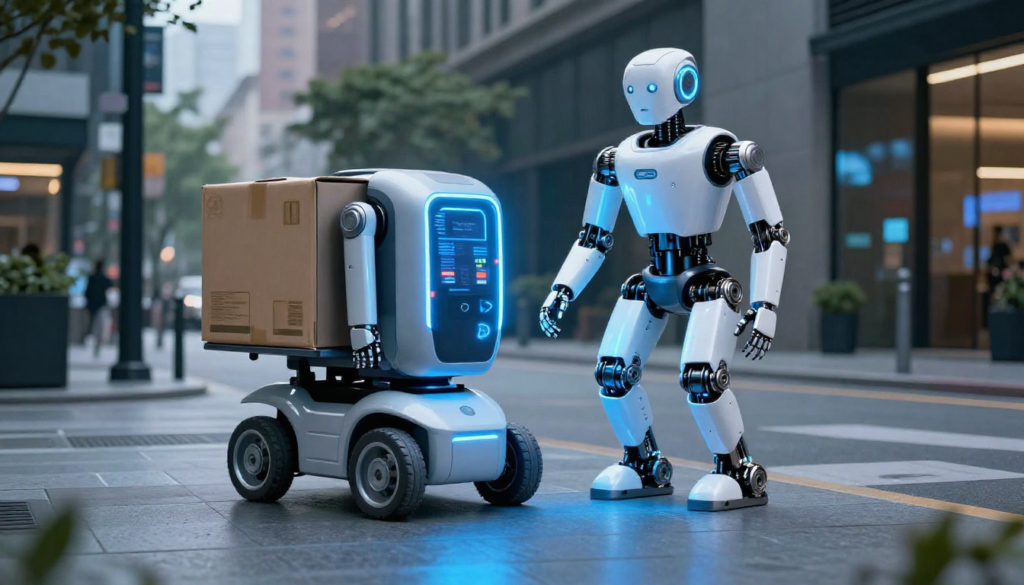
AI used to live entirely on screens. Now it’s moving into the physical world through robots, autonomous vehicles, smart sensors, and industrial systems that can perceive, reason, and act in real environments.
Physical AI — sometimes called embodied AI — is powering the next generation of warehouse robots, surgical assistants, self-driving delivery vehicles, and smart home devices that don’t just respond to commands but actually learn from their surroundings.
For everyday consumers, this trend is showing up in smarter home appliances, more reliable package delivery, and hospitals that can provide faster, more precise care with fewer errors.
5. Confidential Computing — Your Data, Locked Down
Here’s a technology trend that doesn’t get nearly enough attention, but matters enormously: confidential computing.
As more of our most sensitive data — medical records, financial information, business secrets — moves to cloud platforms, there’s a growing need to process that data securely, even while it’s being actively used.
Confidential computing creates a protected “secure enclave” inside the processor itself, so even the cloud provider can’t access the data while it’s being processed. This is a game-changer for industries like healthcare and banking, where data privacy regulations are strict, and the cost of a breach is catastrophic.
For the average person, this means the apps and services you use will be able to offer more advanced features — like personalized health analysis or financial planning — without putting your private data at risk.
6. Preemptive Cybersecurity — Stopping Threats Before They Happen

Traditional cybersecurity reacts to attacks. Preemptive cybersecurity tries to prevent them before they begin.
By using AI to analyze behavioral patterns, network anomalies, and threat intelligence in real time, preemptive cybersecurity systems can identify potential attacks hours or days before they would normally be detected.
This matters more than ever in 2026, because the tools available to cybercriminals have also gotten more powerful. AI-generated phishing emails, deepfake voice scams, and automated attack tools are making the threat landscape increasingly dangerous.
For businesses, investing in preemptive security is shifting from “nice to have” to a genuine survival requirement. For individuals, it means your bank, employer, and favorite apps are working harder than ever behind the scenes to protect you.
7. AI Supercomputing Platforms — The Engine Behind Modern AI
Most people never think about the hardware that powers their AI tools, but it matters enormously. AI supercomputing platforms — combining specialized chips, massive memory, and intelligent orchestration software — are what make all the other trends on this list possible at scale.
The leap in computing power happening right now is comparable to the jump from dial-up internet to broadband. It’s not just faster; it opens up entirely new categories of what’s possible.
For businesses, access to this infrastructure is becoming democratized through cloud providers, meaning even startups can run powerful AI workloads without building their own data centers.
8. Digital Provenance and Data Trust — Knowing What’s Real
In a world increasingly filled with AI-generated content, digital provenance — the ability to verify where a piece of content came from and whether it’s been altered — is becoming critically important.
This technology uses cryptographic signatures and tracking systems to create a verifiable chain of custody for digital content. Think of it as a birth certificate for images, videos, and documents.
For journalists, it helps verify the authenticity of footage. For businesses, it protects against fraudulent contracts or manipulated reports. For everyday users, it’s the foundation of a more trustworthy internet — one where you can actually know whether a news photo or video is real.
As Technology Trends 2026 continue to evolve, digital trust will become increasingly important for businesses and consumers alike.
How Technology Trends 2026 Innovations Are Changing Daily Life
In Healthcare and Personal Wellbeing
Domain-specific AI is helping doctors catch diseases earlier. Physical AI is making surgical procedures more precise. Confidential computing is enabling personalized health apps that actually protect your medical data.
The result: healthcare that’s faster to access, more accurate in its diagnoses, and better tailored to individual patients — not just for wealthy people in major cities, but increasingly for everyone.
In Shopping, Banking, and Everyday Services
Multi-agent AI systems are overhauling customer service — meaning fewer frustrating hold times, faster claims processing, and smarter fraud detection. AI-native development is allowing companies of all sizes to build better apps faster.
If you’ve noticed that your banking app feels smarter, your customer service experiences are getting better, or your shopping recommendations seem more relevant — this is why.
In How We Work
AI-native tools are reshaping knowledge work. Analysts who used to spend days compiling reports now do it in hours. Marketers who needed teams to produce content are working leaner. Developers are building more, faster.
But this doesn’t mean mass job replacement — it means job transformation. The most valuable professionals in 2026 are those who know how to direct and collaborate with AI tools, not just use computers.
What This Means for Businesses in 2026
Small Businesses vs. Large Enterprises
Here’s the interesting thing about the technology trends 2026 landscape: they’re unusually democratizing. Cloud-delivered AI supercomputing, AI-native development tools, and subscription-based security platforms mean a small business can access capabilities that only Fortune 500 companies could afford three years ago.
The risk for larger organizations is complacency. Companies that built expensive legacy systems and are slow to adopt AI-native approaches are increasingly vulnerable to nimbler competitors who started on modern infrastructure.
Industries Being Transformed Fastest
Some sectors are feeling these digital transformation pressures more intensely than others right now:
- Healthcare — AI diagnostics, robotic surgery, personalized treatment
- Financial services — Fraud detection, automated compliance, AI-driven advisory
- Manufacturing — Physical AI, predictive maintenance, autonomous quality control
- Legal and compliance — Domain-specific AI for contract review and regulatory monitoring
- Retail and logistics — Autonomous delivery, AI-powered inventory, hyper-personalized shopping
If your industry is on this list, the question isn’t whether AI will reshape your business — it’s how quickly and whether you’ll lead that change or react to it.
Final Thoughts: Staying Ahead of the Technology Curve
Understanding Technology Trends 2026 today can help individuals and businesses stay competitive in the years ahead.
Technology Trends 2026 are expected to reshape industries and daily life in remarkable ways.
The technologies shaping 2026 are no longer concepts for the distant future. They are already influencing how businesses operate, how people work, and how everyday services are delivered. Understanding Technology trends 2026 today can help you make better decisions tomorrow.
Understanding Technology Trends 2026 today can help individuals and businesses stay competitive in the years ahead.
The good news is that you don’t need to be a tech expert to benefit from them. You do, however, need to stay curious, stay informed, and be willing to adopt new tools as they become accessible.
For businesses: the window to act proactively is now. The companies building AI-native foundations today will have a structural advantage that compounds over time.
For individuals: the best investment you can make is learning how to work with these tools. Understand what AI can do for your job, your finances, and your daily routines — and use it.
Technology moves fast. But so can you.
Next Steps
- Bookmark this article and revisit it in 6 months to track what’s changed
- Explore AI-native tools in your field — many offer free trials
- Talk to your IT team or a digital consultant about where preemptive cybersecurity fits in your business
- Stay current with sources likeGartner’s technology research, MIT Technology Review, and McKinsey Digital
📌 Internal linking suggestions: Link “digital transformation” to your digital transformation overview article; link “AI technology trends 2026” to your dedicated AI explainer post; link “cybersecurity” to your business security guide.
Frequently Asked Questions
Q1. What are the most important technology trends 2026? Technology Trends 2026 include AI-native development platforms, multi-agent AI systems, domain-specific language models, physical AI, confidential computing, preemptive cybersecurity, and AI supercomputing platforms. Together, these form the foundation of the next wave of digital transformation. These Technology Trends 2026 will define the next phase of digital transformation. Understanding Technology Trends 2026 helps businesses prepare for future changes.
Q2. How will AI technology trends 2026 affect small businesses? Positively, in most cases. AI-native tools, cloud-based AI infrastructure, and accessible automation platforms are leveling the playing field. Small businesses can now deploy sophisticated AI capabilities that previously required enterprise-level budgets.
Q3. What is physical AI, and should I care about it? Physical AI refers to AI systems embedded in real-world devices and robots — from warehouse automation to surgical tools to smart home appliances. If your industry involves manufacturing, logistics, healthcare, or physical infrastructure, it’s highly relevant to you right now.
Q4. How are emerging technologies in 2026 changing cybersecurity? The shift is from reactive to preemptive. Modern cybersecurity tools use AI to detect and neutralize threats before they cause damage — analyzing behavioral patterns and network signals in real time rather than waiting for a breach.
Q5. What is confidential computing, and why does it matter? Confidential computing protects data while it’s actively being processed — not just when it’s stored or transferred. It creates a secure hardware-level enclave that keeps sensitive information private even from cloud service providers. It’s particularly important in healthcare, finance, and legal sectors.
Q6. Is AI going to take my job? For most people, AI is more likely to change their job than eliminate it. The skills gaining value are: effectively directing AI tools, critically interpreting AI outputs, and applying human judgment where AI falls short. The workers most at risk are those who refuse to adapt.
Q7. Where can I learn more about future technology trends and digital transformation? Reliable sources include Gartner’s annual trend reports, MIT Technology Review, McKinsey Digital, Harvard Business Review’s technology section, and the World Economic Forum’s technology coverage. For hands-on learning, platforms like Coursera, LinkedIn Learning, and Google’s AI resources offer accessible starting points.
This article was last updated in May 2026. Technology landscapes shift quickly — check back for updates as Technology trends 2026 continue to develop.