
Running a small business means wearing ten hats before lunch. Marketing is usually the hat that gets pushed to the bottom of the pile — not because it doesn’t matter, but because nobody has time to figure out which of the hundred tactics floating around online are actually worth the effort.
This guide skips the theory. Below are more than 25 small business marketing ideas, organized by cost and effort, with real examples of how owners have used them, so you can pick what fits your business instead of trying to do everything at once.
The best small business marketing ideas combine digital marketing strategies, local SEO, email marketing, and customer engagement. These marketing ideas for small businesses help attract more customers and build long-term growth.
Quick Answer: The Fastest Marketing Wins for Small Businesses
If you only have an hour this week, start with these small business marketing ideas: optimize your Google Business Profile, ask happy customers for reviews, and post consistently on one social platform.
Here’s how these small business marketing ideas compare at a glance:
| Marketing Idea | Cost | Difficulty | Time to Results | Best For |
| Google Business Profile optimization | Free | Easy | 1–4 weeks | Local & service businesses |
| Customer review requests | Free | Easy | 2–6 weeks | Any business with repeat contact |
| Social media posting | Free–Low | Easy | 4–8 weeks | B2C, local, product businesses |
| Blog/content marketing | Free–Low | Medium | 3–6 months | Any business, long-term SEO |
| Local SEO basics | Free | Medium | 2–4 months | Local & service businesses |
| Email marketing | Low | Easy | 4–8 weeks | Repeat customers, e-commerce |
| Small-budget PPC ads | Low–Medium | Medium | 1–3 weeks | Businesses with a defined offer |
| Referral program | Free–Low | Easy | 1–3 months | Service businesses, retail |
| Short-form video | Free–Low | Medium | 4–12 weeks | Product businesses, B2C |
| Local partnerships/events | Free–Low | Medium | Ongoing | Local, community-facing businesses |
These small business marketing ideas range from completely free tactics to affordable strategies that deliver long-term business growth.

How to Choose the Right Marketing Ideas for Your Business
Not every tactic on this list belongs in your plan. A dog groomer with a storefront and a B2B software consultant need almost opposite strategies, even though both are “small businesses.” The best small business marketing ideas depend on your industry, budget, and the type of customers you want to reach.
Local service businesses (salons, contractors, restaurants, clinics) get the most value from Google Business Profile, local SEO, reviews, and community partnerships. People searching for you are usually ready to buy within days, not months.
Online product businesses (e-commerce, handmade goods, subscription boxes) lean harder on social media, short-form video, email marketing, and paid ads, since customers rarely need to be physically nearby.
B2B and service-based consultants tend to do better with content marketing, LinkedIn presence, referrals, and email nurture sequences, because the buying decision takes longer and involves more trust-building.
A simple test: if a customer could Google “[your service] near me,” prioritize local tactics first. If your customers could be anywhere in the world, prioritize content and paid digital tactics first.
Take two real-world examples. A neighborhood pet groomer doesn’t need a national ad campaign — she needs to show up when someone nearby searches “dog groomer near me” and needs enough good reviews that a stranger feels comfortable booking. Compare that to an online candle brand shipping nationwide: its growth depends far more on short-form video reach, email list size, and paid social ads than on any local listing. Matching the tactic to buying behavior, rather than copying whatever’s trending, is what actually moves revenue.
It also helps to be honest about your own bandwidth. A one-person shop juggling production, customer service, and bookkeeping realistically has time for two or three marketing tactics done well — not ten done halfway. Pick the ideas below that match both your business type and the hours you actually have available each week.
Focus on creating genuinely helpful content instead of publishing articles just to target keywords. Google’s Helpful Content Guidelines recommend writing for people first while maintaining clear structure and relevance.
Free and Fast Marketing Ideas You Can Start Today
These small business marketing ideas are perfect for owners who want quick wins without spending a large marketing budget. These cost nothing but time, and most can be done in under an hour.
- Claim and optimize your Google Business Profile — add real photos, correct your hours, and list your services. A bakery in a mid-size town found that simply adding weekly photos of new products kept their profile appearing in more “near me” searches. For many local companies, Google Business Profile remains one of the most effective small business marketing ideas for attracting nearby customers.
- Ask for reviews right after a good interaction, not weeks later. Timing matters more than the ask itself.
- Respond to every review, good or bad. A thoughtful reply to a negative review often does more for trust than five positive ones.
- Post consistently on one or two platforms your customers actually use — trying to be everywhere usually means being mediocre everywhere. Consistency makes small business marketing ideas more effective over time.
- Join local Facebook or community groups and answer questions genuinely, without pitching every time.
- Set up a referral program, even an informal one like “bring a friend, get 10% off.”
- Add a call to action to your email signature, like a link to book a consultation or browse new arrivals.
- Cross-promote with a neighboring or complementary business — a florist and a wedding photographer sharing referrals costs nothing and reaches a warm audience.
- List your business on free directories beyond Google: Bing Places, Apple Maps, and industry-specific directories.
- Create a simple FAQ page answering the five questions you get asked most on the phone. These free small business marketing ideas help build trust before customers ever contact your business. These free small business marketing ideas help build trust before customers ever contact your business.
Content and SEO Marketing Ideas
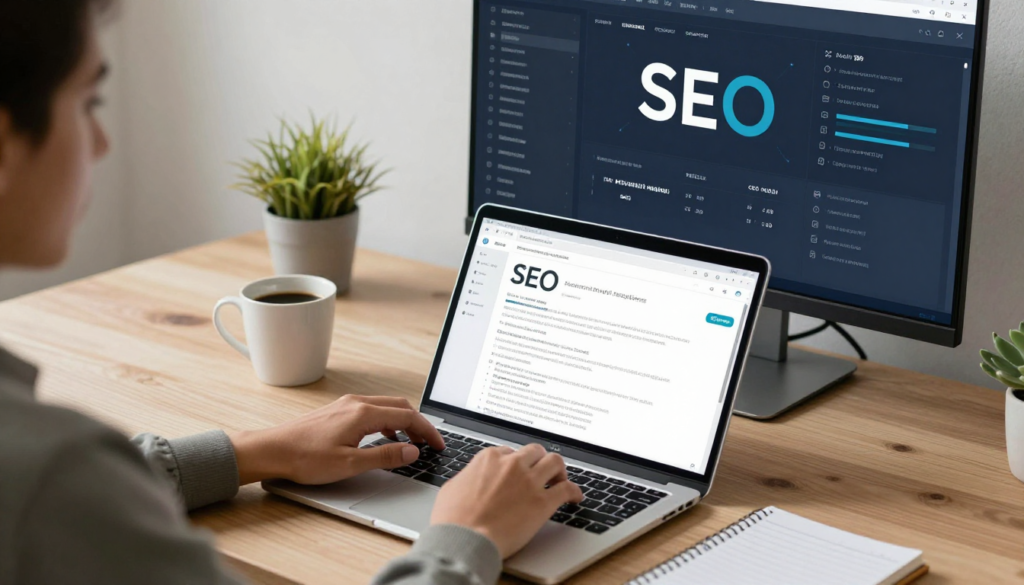
Content marketing remains one of the highest ROI small business marketing ideas because helpful articles can generate traffic for years If you’re new to SEO, explore our complete guide on SEO for Small Businesses.
- Start a blog answering real customer questions. A local HVAC company that wrote “How much does it cost to replace an AC unit” pages saw those pages become their top traffic source within a year.
- Target local SEO keywords—city or neighborhood names paired with your service, not just your service name. Local SEO continues to be one of the most valuable small business marketing ideas for service businesses.
- Add schema markup (LocalBusiness, Product, or FAQ schema), so search engines understand your content structure clearly.
- Build topic clusters instead of one-off posts — cover a topic from multiple angles so search engines see you as a genuine authority, not just a page that happens to rank. Topic clusters strengthen your website and support long-term small business marketing ideas focused on search visibility.
- Repurpose one piece of content into three formats — a blog post becomes a social caption, an email, and a short video script.
- Make sure your content can answer questions directly, since a growing share of searches are now answered inside Google’s AI Overviews or AI chat tools before a user ever clicks a link. Clear headings, direct answers near the top of each section, and well-structured FAQs make it more likely your content gets pulled into those answers — and still earns the click for people who want more detail.
Email and Owned-Audience Marketing Ideas
Email marketing remains one of the most reliable small business marketing ideas because you own your audience instead of relying on changing social media algorithms. Email doesn’t get the hype social media does, but it’s one of the few channels you fully own — no algorithm can take it away.
- Build a list with a simple lead magnet — a discount code, a free checklist, or early access to new products.
- Set up a welcome sequence for new subscribers, introducing your story and best-selling products or services.
- Send a monthly newsletter with something useful, not just promotions — tips, behind-the-scenes updates, or customer stories.
- Follow up on abandoned inquiries or carts with a gentle, non-pushy reminder email.
According to HubSpot Marketing Research, email marketing, SEO, and content marketing continue to deliver strong long-term ROI for many small businesses.
Paid and Low-Budget Advertising Ideas
Paid advertising becomes one of the most effective small business marketing ideas when you begin with a small budget and clear goals. You don’t need a huge budget to test paid ads — you need a clear goal and a small, controlled test.

- Run small-budget Google Search ads targeting a specific service and location, starting with $5–10/day to test messaging before scaling. Paid ads become one of the fastest small business marketing ideas when your offer is already proven.
- Use retargeting ads to reach people who visited your site but didn’t buy — these tend to convert at a lower cost than cold traffic.
- Boost your best-performing organic social posts rather than creating new ad-only content from scratch.
- Try Google Local Services Ads if you’re a service business — you pay per lead rather than per click, which reduces wasted spend.
Community, Partnership, and Word-of-Mouth Ideas
Community partnerships remain one of the most trusted marketing ideas for small businesses, especially for local companies.
- Sponsor a local event or sports team — visibility with a built-in audience that already trusts the organizer.
- Partner with a complementary business on a joint promotion, like a gym and a smoothie shop offering a combined discount.
- Collaborate with a micro-influencer or local creator with a genuinely engaged (not just large) following.
- Start a simple loyalty program — a punch card or points system gives customers a reason to come back specifically to you.
Community-based small business marketing ideas often produce stronger long-term customer loyalty than paid advertising alone. These small business marketing ideas work best when combined with strong customer relationships and consistent follow-up.
Video and Short-Form Content Ideas
Short-form video is now one of the fastest-growing small business marketing ideas for reaching new customers organically.

- Post short-form video showing behind-the-scenes work, quick tips, or product demos. Short-form video is one of the highest-ROI content formats reported by marketers right now, according to Thryv’s 2026 marketing research, because it’s cheap to produce and favored by current platform algorithms.
- Share customer testimonial videos — even a 20-second phone-recorded clip of a happy customer often outperforms a polished ad.
Using AI Tools in Your Marketing
AI is one part of a modern marketing plan, not the whole plan. Used well, it saves time on repetitive work so you can spend more energy on strategy and customer relationships.
Practical ways small businesses are using AI tools right now:

- Drafting first versions of social captions, product descriptions, or email copy, then editing them in your own voice.
- Answering common customer questions through a simple AI chatbot on your website, freeing up phone time for more complex requests.
- Analyzing basic customer data to spot patterns — like which products get abandoned in carts most often.
Adoption is moving fast: the U.S. Chamber of Commerce reports that 58% of small businesses now use generative AI in some form, up from 40% in 2024. That said, the businesses seeing real results are the ones using AI to speed up execution, not to replace their own judgment about what their customers actually want.
A useful way to think about it: AI is good at the first draft and the busywork — a rough email, a batch of social captions, a summary of customer feedback. It’s not good at knowing what makes your business genuinely different from the one down the street. That part still has to come from you. Owners who skip that editing step often end up with content that reads like everyone else’s, which quietly works against the trust and originality that small businesses are usually best positioned to offer. Want to save more time? Explore our latest AI Tools for Small Businesses guide.
According to the U.S. Chamber of Commerce, more than half of small businesses now use generative AI in some part of their operations, showing how quickly AI is becoming a valuable marketing and productivity tool. AI supports small business marketing ideas by saving time, but human creativity still delivers the best results. Avoiding these mistakes helps your small business marketing ideas generate better long-term results.
Common Small Business Marketing Mistakes to Avoid
| Mistake | Why It Hurts | What to Do Instead |
| Trying every platform at once | Spreads effort thin, nothing gets done well | Pick 1–2 channels your customers actually use |
| Ignoring reviews | Signals neglect to future customers | Respond to every review within a few days |
| No clear call-to-action | Visitors don’t know the next step | Add one clear action per page or post |
| Copying competitors exactly | Looks generic, damages trust and originality | Adapt ideas to your own voice and story |
| Treating marketing as one-time | Momentum dies without consistency | Build a simple recurring schedule |
| Skipping measurement | No idea what’s actually working | Track a few simple metrics monthly |
| Over-relying on discounts | Trains customers to wait for sales | Lead with value and story, not just price |
Top 10 Marketing Actions You Can Complete This Week
- [ ] Claim or update your Google Business Profile with current hours and photos
- [ ] Ask 3 recent customers for a review
- [ ] Respond to any unanswered reviews
- [ ] Post once on your main social platform
- [ ] Write down your top 5 most-asked customer questions
- [ ] Add a call-to-action to your email signature
- [ ] Reach out to one complementary business about a partnership
- [ ] Set up a simple lead magnet for your email list
- [ ] Film one 20-second behind-the-scenes video
- [ ] Pick one metric to track weekly (calls, sign-ups, or sales)
How to Measure What’s Working
Tracking results helps you understand which small business marketing ideas deserve more investment. You don’t need complex analytics to know if your marketing is paying off. Track a small handful of numbers monthly:
- Website traffic and source (Google Analytics, free)
- Google Business Profile views and calls (built into your profile dashboard)
- New email subscribers per month
- Conversion rate on your most important page (visitors who take the action you want)
HubSpot’s latest marketing research shows that content marketing, SEO, and email marketing remain among the highest ROI channels for businesses of all sizes, making them excellent long-term investments for small businesses.
If a tactic isn’t moving any of these numbers after 2–3 months of consistent effort, it’s reasonable to pause it and reinvest that time elsewhere.
Keep the tracking simple enough that you’ll actually do it. A basic spreadsheet updated once a month — even five minutes with a coffee in hand — beats an elaborate dashboard you set up once and never open again. The goal isn’t perfect data; it’s enough of a pattern to tell you whether to keep going, adjust, or stop. Choosing the right software also matters. Read our Business Technology Guide for more practical recommendations. Every business should review its small business marketing ideas at least once each month.
A Simple 90-Day Starter Plan

Following this roadmap makes it easier to apply proven small business marketing ideas without feeling overwhelmed. This roadmap helps you implement the most effective small business marketing ideas without trying everything at once.
Days 1–30: Google Business Profile, review requests, one social platform, basic email list setup.
Days 31–60: Start a blog to answer customer questions, add local SEO keywords, and launch a referral program.
Days 61–90: Test a small paid ad budget, add short-form video, review your metrics, and double down on what’s working.
This pacing matters more than it looks. Front-loading everything in week one usually leads to burnout by week three, and half-finished tactics rarely produce results worth measuring. Spacing things out over 90 days gives each idea enough runway to show whether it’s actually working before you add the next one on top. Remember that successful small business marketing ideas are built on consistency rather than chasing every new trend.
FAQs
These frequently asked questions cover the most common concerns about small business marketing ideas.
What is the cheapest way to market a small business? Optimizing your Google Business Profile and asking existing customers for reviews cost nothing but time and typically deliver the fastest visible results for local businesses.
How much should a small business spend on marketing? There’s no universal number, but many small businesses allocate a modest, consistent monthly amount and adjust based on which channels show measurable returns rather than committing a large budget upfront.
What is the single best marketing strategy for a small business in 2026? There isn’t one single best strategy — the right mix depends on whether your business is local, online, or B2B. Consistency across a small number of well-chosen channels tends to outperform sporadic effort across many. The most successful small business marketing ideas are the ones you can apply consistently over the long term.
Do small businesses still need SEO if AI search is growing? Yes. AI Overviews and AI chat tools pull their answers from well-structured, credible web content, so strong SEO fundamentals still matter — arguably more, since clear, direct answers are now rewarded in two places instead of one.
How long does it take to see results from small business marketing? Fast-moving tactics like reviews and social posting can show early signs within weeks. SEO and content marketing typically take three to six months to build meaningful traction.
Should a small business hire an agency or do marketing in-house? It depends on time and expertise. Many owners start in-house with free and low-cost tactics, then bring in outside help for specialized work like paid ads or ongoing content once they see which channels are worth scaling.
What marketing mistakes do most small businesses make? The most common ones are trying too many platforms at once, ignoring customer reviews, and stopping a tactic before giving it enough time to work.
Final Thoughts
Marketing a small business doesn’t require a big budget because the right small business marketing ideas matter more than spending more money.
If you’re building out your broader business strategy or If you’re looking to grow your business further, explore Halgain’s practical guides on SEO, AI tools, and business technology to build a stronger long-term marketing strategy. The best small business marketing ideas are the ones you can repeat consistently every week. Consistent execution always beats constantly switching between different small business marketing ideas. Successful small business marketing ideas focus on consistency, measurement, and continuous improvement rather than chasing every new trend.